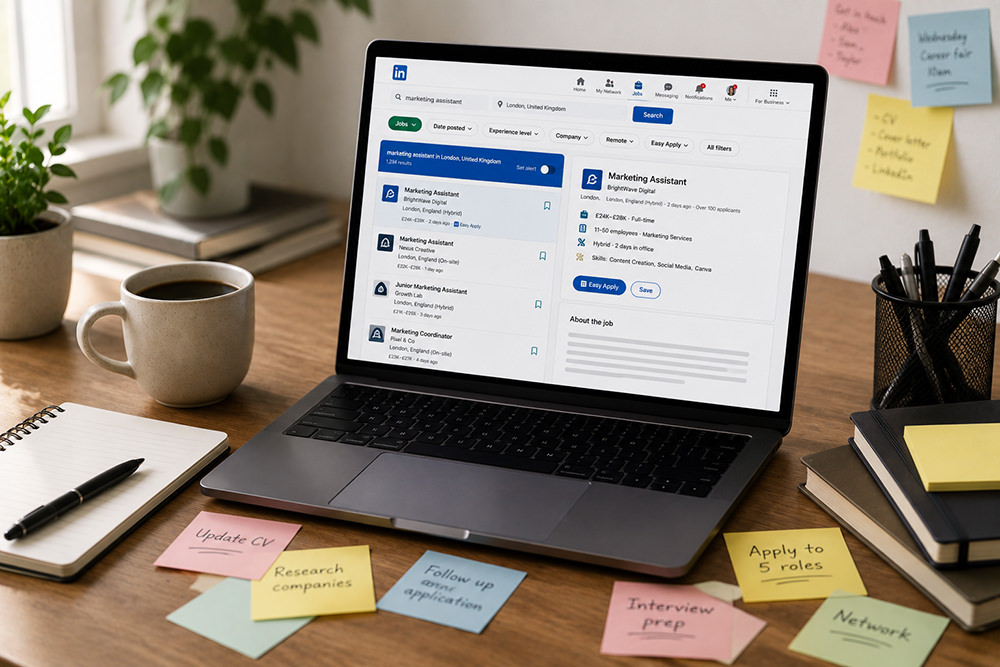
Job search routine8 min read
How To Build A Simple Job Search Routine That You Can Stick To
A simple, realistic job search routine that helps you stay organised, apply consistently and avoid burning out. Most job searches start the same way. You update your CV, browse a few job boards and feel motivated to make a change. For the first week or two, everything feels positive. You're checking new roles regularly, applying consistently and imagining where your next opportunity might take you. Then reality arrives. Work gets busy. Family commitments take over. A few applications are rejected. Some employers never reply at all. Before long, the routine disappears and job searching becomes something you should be doing rather than something you actually are doing. The problem is rarely a lack of ambition. Most people want a new role badly enough. The challenge is building a job search routine that works when motivation inevitably comes and goes.
Read articleJob search routine8 min read
How To Plan Your Week When Job Searching
A practical weekly structure for staying organised, protecting your time and improving application quality during a job search. Job searching can quickly become chaotic without some kind of structure. At first, most people think they will just apply to jobs when they have time. But after a few weeks, things often become messy. You forget where you applied, lose track of deadlines, rush applications late at night and constantly feel like you should be doing more. That feeling becomes even harder when you are balancing an existing job, studies, family responsibilities or general life admin alongside applications. The truth is, job searching is not only about effort. Organisation matters just as much. Having a proper weekly plan can reduce stress, improve application quality and help you stay consistent without feeling overwhelmed.
Read articleJob search burnout8 min read
How To Avoid Job Search Burnout
Practical ways to reduce job search stress, stay organised and protect your energy when applications start feeling relentless. Job searching can become emotionally draining surprisingly quickly. At the start, most people feel motivated. You update your CV, apply for a few roles and feel optimistic about what might happen next. But after weeks or months of applications, rejections and silence, the process can start affecting your confidence, motivation and energy levels. For some people, job searching slowly becomes a full-time mental load. You wake up thinking about applications, spend hours scrolling through job boards and end the day feeling like you achieved very little. That is where job search burnout often starts. And the reality is, it is becoming increasingly common. Search trends around phrases like “cant find a job”, “i cant get hired”, “struggling to find a job” and “job search burnout” have continued growing as more people deal with long application processes and competitive hiring markets. The good news is that burnout is not inevitable. There are practical ways to reduce stress, stay organised and protect your energy while still moving your job search forward.
Read articleAI applications8 min read
Why Generic AI Answers Can Hurt Your Job Applications
Why generic AI responses can weaken applications and how to use AI in a more grounded, specific way. AI tools are quickly becoming part of modern job searching. People are using them to improve CVs, write cover letters, prepare interview answers and speed up applications. In many ways, that makes complete sense. Applying for jobs can be exhausting, repetitive and time-consuming, especially when you are balancing work, studies or multiple applications at once. The problem is not that people are using AI. The problem is that many applications are starting to sound exactly the same.
Read articleAI tools8 min read
Should You Use AI To Help With Your CV?
A practical view on using AI for CV writing without losing authenticity or making your application sound generic. AI is becoming part of almost every stage of the job search process. From writing cover letters to preparing interview answers, more people are now using AI tools to help improve applications and save time. CVs are no exception. The question is no longer whether people are using AI for their CVs. They clearly are. The more useful question is whether they are using it well. The short answer is yes, AI can genuinely help with your CV. But like most tools, the outcome depends on how you use it. Used properly, AI can help you create a clearer, stronger and more professional CV. Used badly, it can leave you with something generic, exaggerated or obviously written by a machine.
Read articleInterview answers7 min read
How To Answer “Why Do You Want To Work Here?” Without Sounding Generic
A clear framework for answering a common interview question without sounding scripted or vague. “Why do you want to work here?” is one of those interview questions that sounds simple until you actually have to answer it. Most people know they should not say, “I just need a job.” But they also do not want to sound fake, overly polished or like they have copied something from the company website. The good news is that this question is not really asking you to flatter the company. It is asking whether you understand the role, have thought about why it suits you and can explain your motivation clearly.
Read articleGraduate applications8 min read
How To Stand Out When Applying For Graduate Roles
Practical advice for graduates who want stronger applications, better research and clearer writing. Applying for graduate roles can feel frustrating very quickly. You spend hours tailoring applications, updating your CV and filling out forms, only to hear nothing back. Then you open LinkedIn and it suddenly feels like every other graduate already has internships, connections and experience you do not. The reality is that graduate recruitment is highly competitive. Some employers receive hundreds or even thousands of applications for a single role. But standing out is not always about having the most impressive background. In many cases, candidates blend together because their applications feel rushed, generic or overly scripted. Small improvements can genuinely make a big difference.
Read article